WILDLIFE CANNOT SPEAK FOR ITSELF
As an all-volunteer board on the front line of conservation in our valley, we are literally boots on the ground, conducting ongoing bird (our indicator species) and other wildlife surveys to present to our policy makers, encouraging them to protect threatened habitats and the plants and animals that rely on them throughout the Roaring Fork Watershed.
We work with Pitkin County Healthy Streams and Rivers and the U.S. Forest Service to target and survey the best sites to reintroduce our wetland engineers and keystone species, the American beaver. We have successfully reintroduced several beaver into new habitats and have witnessed their wetland creations.
We stay abreast of local issues and work with residents in Spring Valley, Cattle Creek, Sweetwater and Homestake Reservoir to protect their lands for our wildlife.
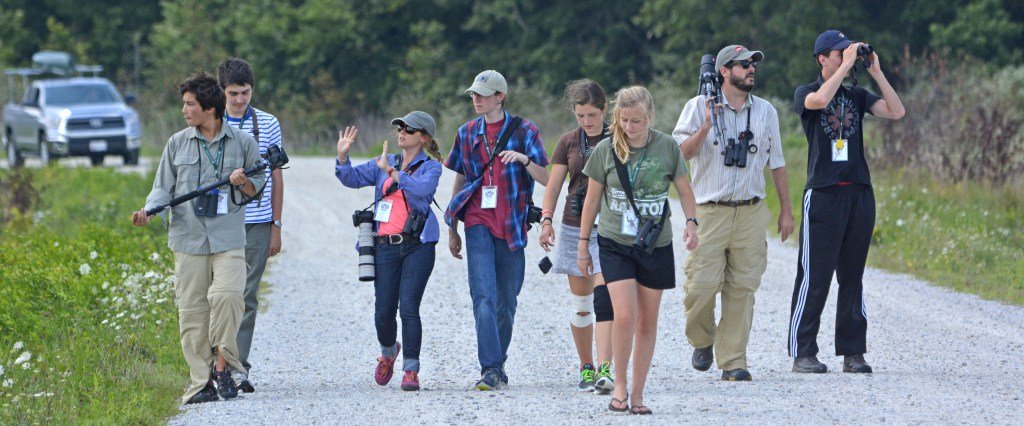
We offer free nature/bird walks to educate locals about the animals and plants in the natural areas we strive to protect. We hope this education transfers into action.
We provide an updated, printed booklet documenting the birds and mammals of the Roaring Fork Watershed. The booklet is also available on our website.
We work with local schools and have installed nest boxes, provided educational books and given classes to enrich them about our avian wonders and encourage them to spend time in nature.
With ACES and Wilderness Workshop, we co-host free educational speakers through Naturalist Nights in Aspen and Carbondale.
We email a monthly newsletter to keep our valley informed of hot-action topics, our free field trips and programs and speakers. It will keep you updated on local threats and assaults on wildlife habitat and provide opportunities to comment.
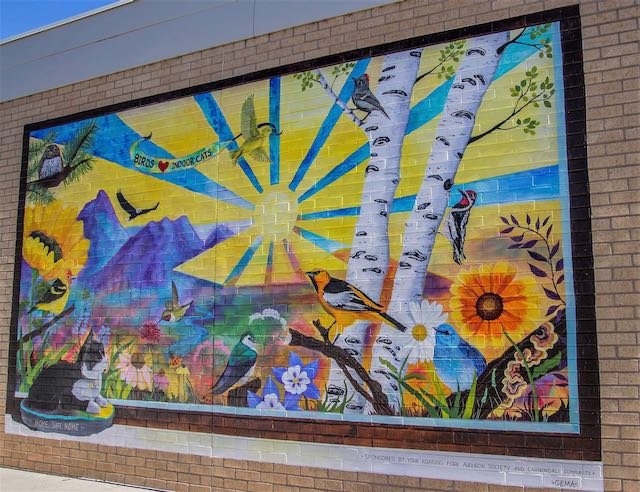
We continue to educate about why birds matter and bird friendly living, focusing on saving habitat, keeping cats indoors, bird-window collision prevention, eliminating pesticide use, planting native, buying shade-grown coffee and more.
We offer full scholarships to local kids to attend a week-long birding/nature camp to learn about our natural world and why saving it is important.
We rely on local community donations to make our work possible. We also continually seek grant funding for our ongoing projects.
And there’s more:
Our contributions to the Audubon Colorado Lobbyist Fund support environmental lobbyists working on state issues.
Binoculars for adults and children are provided to make sure everyone can participate equally.
Our monthly publication of email blasts keeps our valley informed of hot-action topics, our free field trips and programs and speakers.
Every year, we conduct Christmas and Spring Bird Counts and send our data to National Audubon Society so they have a picture of what is happening with our birdlife.
We monitor and care for over 100 Mountain Bluebird nest boxes in various places in our valley.
All valley residents who have questions about our birds and how to protect them are encouraged to contact us.
We funded the radio transmitters on the rare Black Swifts to find their previously unknown wintering grounds in the Brazilian Amazon, enabling conservationists to work on protections
We installed interpretive signage at Spring Park Reservoir depicting the importance of this stopover as a feeding and recovery area for thousands of waterfowl during migration. We were also instrumental in having the reservoir designated as an Important Bird Area (IBA), a national program with more than 50 IBAs in Colorado.
We helped to fund the purchase of Tucson Audubon’s Paton Center for Hummingbirds in Southeast Arizona, an important fueling station for migrating hummingbirds, many of which breed in the Roaring Fork Valley.
We partnered with the Colorado Breeding Bird Atlas to help support their research and documentation of birds in our state and how to protect them.
We supported the ongoing efforts of the Thompson Divide Coalition to protect our valley’s fragile breeding lands.
We provided window treatments for our local bus transportation system to use on their glass bus stops to help prevent bird-glass collisions; and, although they have not yet implemented the system, we offer support.
We worked with several of the local schools building bluebird nest boxes with the children and educating them about habitats, migration and nesting.
We assisted our U.S. Forest Service with their ongoing project to improve habitat in the various elevations of our diverse valley by recommending critical treatment times.
We met with local government and architects to discuss options for bird-safe building.